

Petra Tours in Jordan – Explore the Ancient Rose City with Local Experts
Step into one of the world’s most extraordinary archaeological destinations with our expertly guided Petra Tours. Hidden among the dramatic sandstone mountains of southern Jordan, Petra is a place where ancient history, remarkable engineering, and breathtaking landscapes come together to create an unforgettable travel experience.
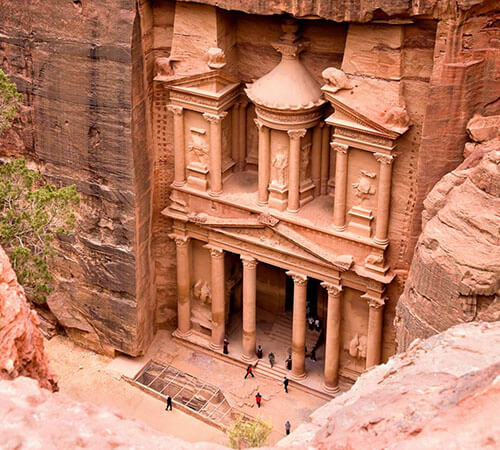
Recognized as a UNESCO World Heritage Site and one of the New Seven Wonders of the World, Petra has captivated visitors for centuries. From the moment you walk through the narrow Siq and catch your first glimpse of the magnificent Treasury, you’ll understand why millions of travelers consider Petra the highlight of their journey through Jordan.
Whether you’re planning a day trip from Amman, a multi-day Jordan itinerary, or a private cultural adventure, our Petra Tours are designed to help you experience the city’s fascinating history, hidden trails, and spectacular viewpoints with knowledgeable local guides.
Why Visit Petra?
Petra is much more than an ancient city carved into sandstone cliffs. It is one of the greatest archaeological treasures in the Middle East and a remarkable example of human creativity and innovation.
More than 2,000 years ago, the Nabataeans transformed a remote desert valley into a thriving trading center that connected Arabia, Egypt, Syria, and the Mediterranean. Their advanced water management systems, monumental architecture, and strategic location helped Petra become one of the wealthiest cities of the ancient world.
Today, visitors can explore magnificent temples, royal tombs, rock-cut staircases, ceremonial altars, ancient streets, and breathtaking viewpoints while learning about the civilizations that shaped this incredible destination.
Petra Tour Highlights
Every visit offers new discoveries. Some of the must-see attractions include:
- Walk through the dramatic Siq canyon.
- Admire the iconic Treasury (Al-Khazneh).
- Explore the Street of Facades.
- Visit the Royal Tombs.
- Discover the Roman Theatre.
- Wander along the Colonnaded Street.
- Explore the Great Temple Complex.
- See the beautiful mosaics inside the Byzantine Church.
- Climb to the impressive Monastery (Ad Deir).
- Enjoy panoramic views from the High Place of Sacrifice.
- Experience authentic Jordanian hospitality in nearby Wadi Musa.
Whether you’re interested in archaeology, photography, hiking, or cultural experiences, Petra offers something for every traveler.
The Story Behind Petra
Long before it became one of the world’s most famous archaeological sites, Petra served as the capital of the Nabataean Kingdom. Located along major caravan routes, the city prospered through the trade of valuable goods such as frankincense, spices, textiles, and precious metals.
The Nabataeans were exceptional engineers who overcame the challenges of a desert environment by building sophisticated water channels, reservoirs, and cisterns. These systems collected and stored rainwater, allowing thousands of people to live and thrive in an otherwise dry landscape.
As the Roman Empire expanded into the region, Petra continued to flourish and many public buildings were enhanced with Roman architectural influences while preserving the city’s unique Nabataean identity.
Over time, changing trade routes and natural disasters led to Petra’s gradual decline. For centuries, the city remained largely hidden from the outside world until it was reintroduced to international travelers during the nineteenth century. Today, ongoing archaeological research continues to uncover new insights into Petra’s remarkable past.
Traveler Notices – Know Before You Visit Petra
Planning ahead helps you make the most of your visit.
Entry Information
- Carry a valid passport or government-issued identification.
- Consider purchasing the Jordan Pass before arriving, as it may include entry to Petra and other attractions.
- Keep your admission ticket accessible throughout your visit.
Opening Hours
- Opening times may vary by season. Morning visits are generally recommended to enjoy cooler temperatures and fewer crowds.
- Petra by Night is offered on selected evenings throughout the year, subject to availability.
Walking Requirements
- Exploring Petra involves significant walking over uneven surfaces.
- Depending on your chosen route, visitors typically walk between 8 and 15 kilometers during a full-day visit.
- The trail to the Monastery includes approximately 800 stone steps.
- Comfortable walking shoes are essential.
Weather
- Spring and autumn provide the most comfortable conditions for sightseeing.
- Summer temperatures can become very hot during midday, while winter mornings and evenings may be cool.
- Carry plenty of drinking water, wear sunscreen, and protect yourself from the sun with a hat and sunglasses.
Accessibility
- Some areas within Petra have uneven terrain and steep inclines.
- Horse-drawn carriages, camels, and donkeys may be available through licensed local operators for selected routes.
- Visitors with mobility concerns should discuss accessibility options before booking.
Why Travel with Go Jordan Tours?
Our experienced local team is committed to providing memorable travel experiences across Jordan.
When you book with us, you’ll benefit from:
- Professional local guides with in-depth destination knowledge.
- Flexible private and group tour options.
- Comfortable transportation throughout your journey.
- Carefully planned itineraries.
- Transparent pricing with no hidden surprises.
- Personalized travel assistance before and during your trip.
- Friendly customer support from arrival to departure.
We believe every traveler deserves an authentic Jordanian experience that combines history, culture, adventure, and genuine hospitality.
What Makes Petra Unique?
- Few destinations in the world combine natural beauty and ancient architecture as dramatically as Petra.
- Towering sandstone cliffs display stunning shades of red, pink, orange, and gold throughout the day, constantly changing with the sunlight.
- Hidden pathways lead to impressive temples, ceremonial spaces, and panoramic viewpoints, while archaeological discoveries continue to reveal new chapters of Petra’s remarkable history.
- Every visit offers opportunities to experience one of humanity’s greatest cultural achievements while exploring one of Jordan’s most treasured landmarks.
Frequently Asked Questions?
The most crucial aspect of your Petra Tour is allowing enough time to explore. The site is immense, and you're advised to allocate at least two full days to see the major sites like the Siq, The Treasury (Al Khazneh), the Monastery (Ad-Deir), and the High Place of Sacrifice. Trust us, one day is not enough to truly appreciate this UNESCO World Heritage Site.
Petra was built by the Nabataean Arabs, nomadic traders who settled here over 2,000 years ago. Their uniqueness lies in their ability to carve magnificent structures directly into the soft sandstone rock faces. They blended their native Arabian styles with Greek and Assyrian designs, creating a unique architectural hybrid, especially noticeable in tombs and temples like The Treasury.
As a dedicated division, we leverage the established infrastructure and expertise of GO JORDAN TRAVEL and TOURISM. This includes investing in specialized personnel and logistics to manage all aspects of your journey, ensuring high-quality service, reliable transport, and knowledgeable local guiding from your arrival to your departure.
If time is constrained, your Petra Tour must prioritize: 1) The Siq, 2) Al Khazneh (The Treasury). If you have a few extra hours, a visit to the Royal Tombs is highly recommended for their intricate carvings and colors. We recommend booking a minimum of a 2-day tour to avoid rushing the experience.
Absolutely. Petra by Night is a magical experience where the Siq and The Treasury are illuminated by thousands of candles, offering a completely different perspective of the site. It runs on Mondays, Wednesdays, and Thursdays. Tickets can typically be purchased at your hotel reception in Wadi Musa or directly at the main entrance gate.
The Nabataeans were masters of hydrology. Their most significant technical achievement was creating a sophisticated water supply system using channels carved into the rock (many visible in the Siq) and plaster-lined cisterns. This enabled them to support a large population, public baths, and construction in an arid region.
Both are strenuous and require climbing many steps (approximately 800 to Ad-Deir). We classify them as intermediate to difficult climbs. It's essential to wear sturdy footwear, carry ample water, and take your time. The fantastic vistas along the way, especially over Wadi Araba from Ad-Deir, make the effort worthwhile.
Yes, we actively encourage and can arrange unique cultural add-ons. Petra Kitchen is a popular option where you can take a cooking class with local Jordanian women and professional chefs to learn to prepare authentic Arabian cuisine. Reservations are required, and we handle all the booking details for you.
Petra's decline began in the 3rd Century AD when the Red Sea trade route became easier and more popular than the overland route through Arabia. This diverted commerce away from the city. Its final abandonment followed a massive earthquake in 747 AD which caused extensive destruction. It was "lost" to the Western world until its rediscovery in 1812.
